Cerebrovascular
A cerebral aneurysm is a weak or thin spot on a blood vessel in the brain that balloons out and fills with blood. Most concerning is the possibility that an aneurysm may rupture, leaking blood into the surrounding brain tissue — a medical emergency.
Brain aneurysms can develop in anyone, at any age, and are slightly more common in women than men. Many small aneurysms never cause symptoms, while larger ones may press on nerves affecting vision and eye movement. When an aneurysm ruptures, people often describe “the worst headache of my life,” sometimes with double vision, a stiff neck, nausea, or loss of consciousness.
Treatment depends on the aneurysm’s size, shape, and location, and on the patient’s overall health. The two main options are microsurgical clipping — placing a small clip across the aneurysm’s neck — and endovascular coiling, in which platinum coils are guided through a catheter to seal the aneurysm from the inside.
Cerebrovascular
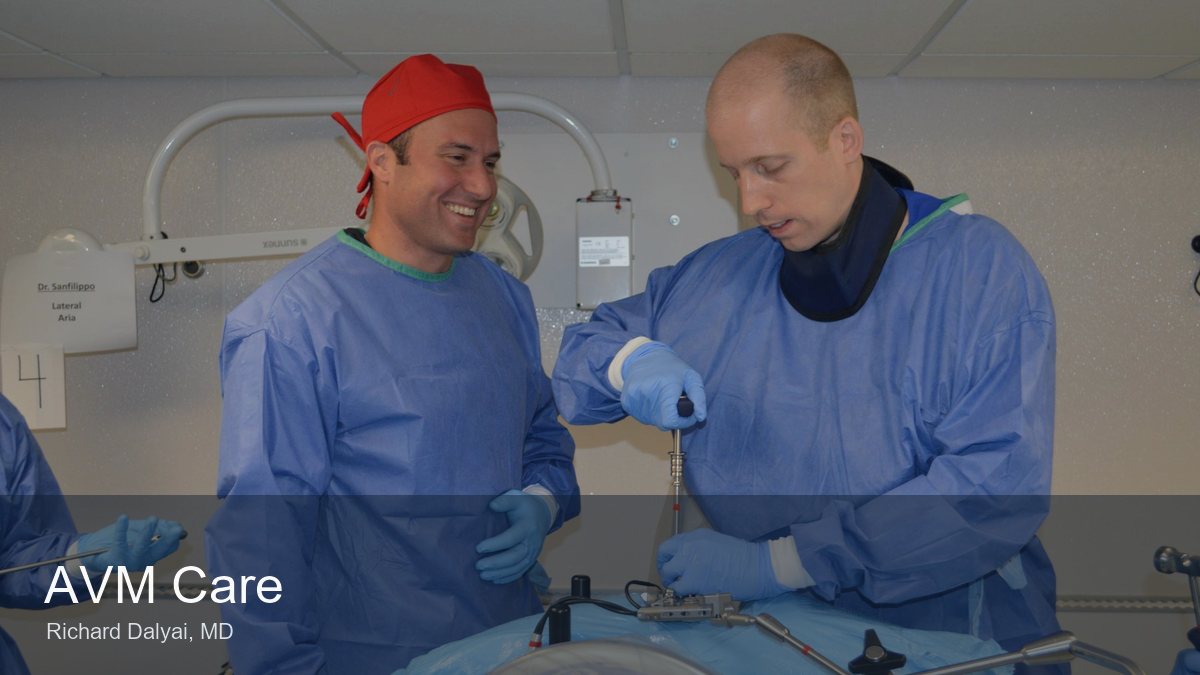
A cerebral arteriovenous malformation (AVM) is an abnormal tangle of blood vessels where arteries connect directly to veins, bypassing normal brain tissue. AVMs are usually congenital — present from birth — and are typically not inherited. The main risk is bleeding, which can cause stroke symptoms, neurological deficits, or worse.
A dural arteriovenous fistula (dAVF) is an abnormal connection between arteries supplying the brain’s covering and nearby veins. Some cause symptoms like pulsatile ear ringing or eye changes, and higher-risk fistulas need treatment to prevent hemorrhage.
Treatment is tailored to the size, location, and blood flow of each lesion. Options include surgical removal, endovascular embolization through catheters, and Gamma Knife stereotactic radiosurgery — sometimes used in combination for complex cases.
Emergency Care
A stroke happens when blood flow to part of the brain is interrupted — either by a clot (ischemic stroke) or by bleeding (hemorrhagic stroke). Brain cells begin to die within minutes, which is why rapid recognition and treatment are critical.
For many large-vessel ischemic strokes, mechanical thrombectomy — physically removing the clot through a catheter — can dramatically improve outcomes when performed quickly. Recognizing the warning signs and calling 911 immediately gives patients the best chance at recovery.

Cerebrovascular
The carotid arteries in the neck supply blood to the brain. When they narrow due to plaque buildup, the risk of stroke rises. Dr. Dalyai treats carotid disease with both carotid artery stenting and endarterectomy (surgical removal of plaque), selecting the approach that best fits each patient’s anatomy and risk profile.
Spine
In addition to cerebrovascular work, Dr. Dalyai treats common spinal conditions including cervical and lumbar disc herniations, spinal stenosis, and spondylolisthesis. Care ranges from conservative, non-surgical management to targeted surgical treatment when appropriate.
Learn More
Reputable, physician-reviewed patient information from national neurosurgical organizations. These links open in a new tab.
AANS/CNS Cerebrovascular Section — patient guide to brain aneurysms.
Visit resource →AANS — arteriovenous malformations: symptoms, diagnosis, and treatment options.
Visit resource →AANS/CNS Cerebrovascular Section — carotid artery disease and treatment.
Visit resource →Medscape / eMedicine — clinical overview of carotid-cavernous sinus fistula.
Visit resource →AANS/CNS Cerebrovascular Section — stroke causes, symptoms, and treatment.
Visit resource →AANS — the full library of neurosurgical conditions and treatments.
Visit resource →External links are provided for education and are not endorsements. Always discuss your specific situation with your physician.
Frequently Asked Questions
Detailed answers to the questions patients and families bring to the clinic.
A cerebral aneurysm (also called an intracranial or intracerebral aneurysm) is a weak or thin spot on a blood vessel in the brain that balloons out and fills with blood. A bulging aneurysm can press on a nerve or surrounding brain tissue, but the major concern is that it may rupture and bleed into the brain. Some aneurysms — especially tiny ones — cause no problems and carry a low risk of bleeding.
Brain aneurysms can develop in anyone at any age, are more common in adults than children, and slightly more common in women. People with certain inherited disorders (such as polycystic kidney disease and connective tissue disorders) are at higher risk. Reported ruptured aneurysms occur in about 10 per 100,000 people per year, most commonly between ages 30 and 60. Risk factors for rupture include smoking, high blood pressure, and alcohol or drug abuse.
A rupture can bleed around the brain (a subarachnoid hemorrhage), leading to hemorrhagic stroke, permanent nerve damage, or death. Once ruptured, an aneurysm has a high chance of rupturing again, which is why we treat ruptured aneurysms quickly. Complications can include hydrocephalus (fluid buildup) and vasospasm (narrowing of other brain vessels that limits blood flow), both of which can cause further injury.
Most aneurysms cause no symptoms until they grow large or burst. A larger, growing aneurysm may press on nerves affecting the eyes and vision. When an aneurysm hemorrhages, a person may have a sudden, extremely severe headache — often described as “the worst headache of my life” — along with double vision, nausea, vomiting, a stiff neck, a drooping eyelid, light sensitivity, changes in awareness, seizures, or loss of consciousness. Anyone experiencing this should seek immediate medical attention.
There are two main surgical options. Microvascular clipping involves removing a section of skull, locating the aneurysm under a microscope, and placing a small metal clip across its neck to stop blood flow into it. Endovascular coil embolization threads a catheter from an artery in the leg up to the aneurysm and releases platinum coils that fill it and block it off from circulation. The best choice depends on the aneurysm’s type, size, and location, and on the patient’s age, health, and history.
Endovascular coiling typically takes about 1½–3 hours, and aneurysm clipping about 4–5 hours. General anesthesia is used for clipping and most coiling procedures, with a neuro-anesthesiologist present throughout.
It depends greatly on whether the aneurysm has ruptured. Patients with unruptured aneurysms usually stay about 2–3 days depending on treatment. For a ruptured aneurysm (subarachnoid hemorrhage), the stay varies with the severity of the bleed and the patient’s condition on arrival — in severe cases, from about 14 days to a month.
Most clipping incisions heal in about six weeks; sutures may dissolve over several weeks or staples are removed after about two weeks. After coiling, the groin puncture site heals quickly. Most clipping patients are off pain medication within 1–3 weeks. Patients with unruptured aneurysms usually wait about two weeks before driving; those treated by coiling can often drive sooner. After coiling, imaging follow-up (MRA or angiography) is needed to confirm the aneurysm stays sealed, sometimes up to five years; most clipping patients do not need further imaging.
Yes. All titanium clips and platinum coils used are MRI compatible.
When more than one family member has been diagnosed with an aneurysm, it is recommended that other family members talk with their physicians about non-invasive screening, such as MRA or CTA.
This information is educational and general. Every patient and every aneurysm is unique — treatment decisions should always be made with your own physician.
Subscribe to receive Dr. Dalyai’s plain-language articles on the brain, stroke, and vascular health.
No spam. Unsubscribe anytime.